EPIC-MRA PRESS RELEASE MICHIGAN POLL ON TARIFFS
June 26, 2026
600 Sample Statewide Poll of Active and Likely November 2026 Voters
Polling Dates: June 15-20, 2026
Conducted by live interviewers, including 80% cell phones -- Margin of Error: ±4.0
Key survey findings
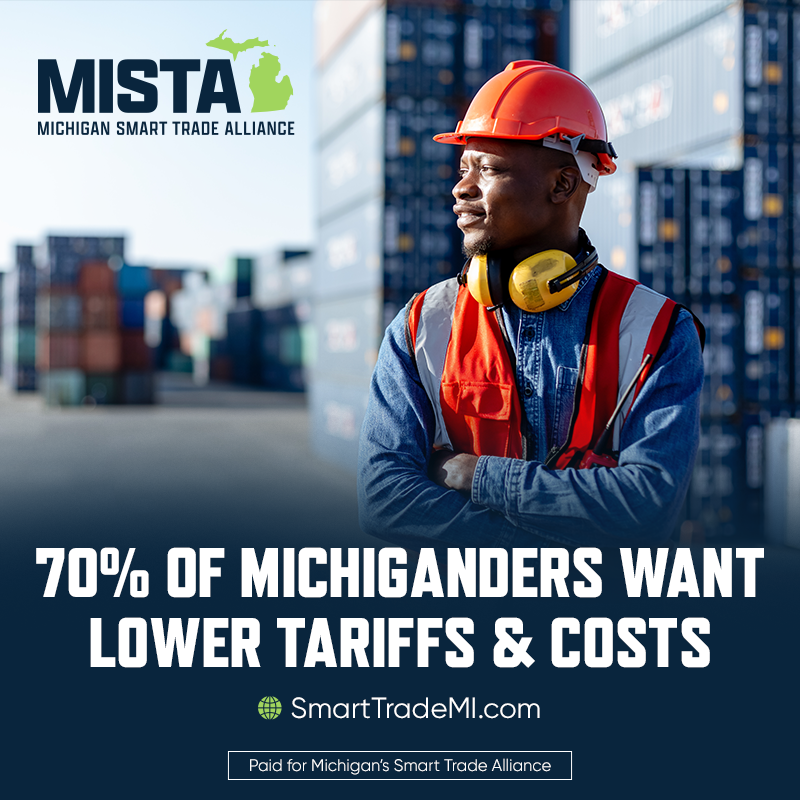
By a solid 70% to 20% majority, voters say that state and federal lawmakers should pursue a different trade policy that reduces tariffs and lowers costs for consumers.
74% of voters say tariffs are contributing to inflation and affordability concerns, including 57% who strongly agree and only 21% who disagree.
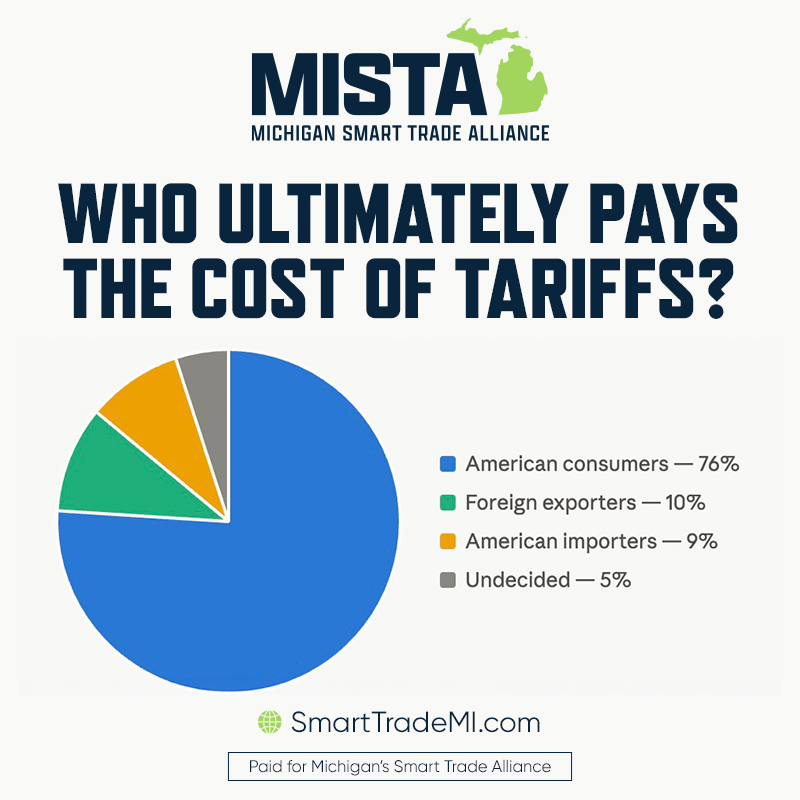
76% of voters say American consumers pay most of the cost of imposing tariffs on imported goods.
By nearly a 2-to-1 margin of 40% to 21% voters are less likely to support a candidate who supports tariffs.
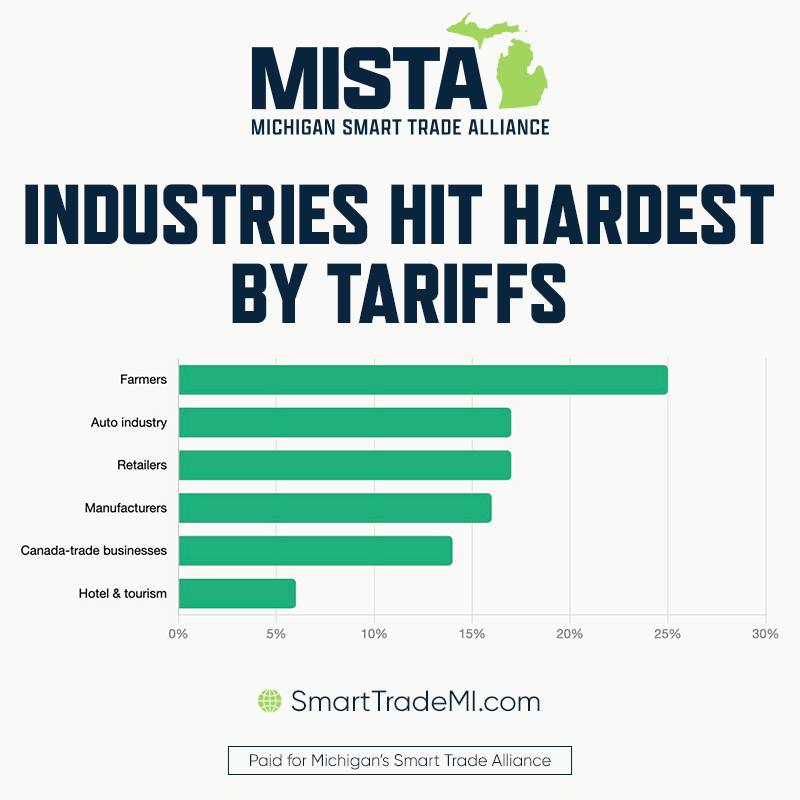
25% say farmers are impacted the most by tariffs, followed by the auto industry and retailers at 17% each, manufacturers at 16% and businesses reliant on trade with Canada at 14%.
Voters oppose tariffs on auto and manufacturing parts imported from Canada by a 63% to 31% majority, including 49% strongly opposed.
Michigan voters oppose tariffs by a 48% to 43% plurality, including 35% strongly opposed to tariffs and 25% who strongly support them.
When offered competing arguments, voters prefer reducing tariffs to keep costs down by 47% to 43% over raising tariffs to reduce trade deficits and encourage domestic manufacturing.
This survey was commissioned by the Michigan Smart Trade Alliance (MISTA).
When respondents were asked: “Generally speaking, do you support or oppose the United States imposing tariffs on imported goods?” A 48% to 43% plurality said they oppose tariffs, including 35% who strongly oppose tariffs and 25% who strongly support them. A 79% to 12% majority of Democrats, 58% to 31% of Independent voters oppose tariffs, while an 81% to 13% majority of Republicans said they support tariffs.
Respondents were asked: “Who do you think ultimately pays most of the cost of imposing tariffs on imported goods?” A 76% overwhelming majority said the “American consumers,” 10% said “Foreign companies exporting goods to the U.S,” 9% said “American businesses that import goods,” with 5% “undecided.” A 90% near unanimous majority of Democrats, 82% of Independents and 60% of Republicans said “American consumers” with 22% of GOP voters saying “Foreign companies.”
Voters were asked: “Which of the following industries in Michigan do you think are feeling the impacts of tariffs the most?” From a list of six read, 25% said “Farmers,” 17% said “The Auto Industry,” 17% said “Retailers,” 16% said “Manufacturers,” 14% said “Businesses who rely on trade with Canada,” 6% said “Hotel and tourism-based businesses,” with 5% “undecided.” 27% of Democrats, 24% of Independents and 24% of Republicans cited Farmers as their top choice.
Voters were asked: “Do you think tariffs are contributing to inflation and what is considered to be an affordability problem for many Michiganders?” A 74% solid majority said “yes,” including 57% who said “yes, strongly,” with only 21% saying “no,” including 12% who said “no, strongly.” A 93% overwhelming majority of Democrats, 84% of Independents, and 51% to 44% of Republicans all agreed with a “yes.”
When asked: “Do you support or oppose imposing tariffs on auto and manufacturing parts coming from Canada,” a 63% majority oppose these tariffs (49% strongly), and 31% support them (15% strongly). 88% of Democrats and 71% to 27% of Independents are opposed, with Republicans supporting tariffs on Canada by 56% to 35%.
When asked: “Which ONE of the two following statements comes closest to your view?”
“The U.S. should raise tariffs to reduce our country’s trade deficit with other countries and bring back manufacturing jobs to America, even if it means higher prices for consumers.”
OR
“The U.S. should NOT impose as many new tariffs so that we can keep working toward lowering costs, even if that means America has a trade deficit with other countries and there aren’t as many potential manufacturing jobs that could be created over time.”
A 47% plurality prefers controlling tariffs to keep costs down, with 43% saying they prefer raising tariffs to reduce trade deficits and encourage domestic manufacturing. A 77% majority of Democrats and 56% to 26% of Independent voters prefer NOT imposing new tariffs to reduce costs, while 80% of Republicans prefer to raise tariffs, even if it means higher prices for consumers.
When asked: “If you learned a candidate for political office supported tariffs on imported goods, would you be more likely to vote for that candidate in the election, less likely to vote for that candidate, or would the issue of tariffs not influence your vote one way or the other?” 40% are less likely to vote for that candidate (26% much less likely), 21% are more likely (10% much more likely), with 36% not influenced. 68% of Democrats and 40% to 10% of Independent voters are less likely to vote for that candidate, with 44% to 8% of Republicans more likely to vote for that candidate (46% not influenced).
Finally, voters said by 70% that state and federal legislators should encourage a different tariff and trade policy that reduces tariffs and costs on consumers, with 20% saying this should NOT be done. 82% of Democrats, 71% of Independents, and 57% to 32% of Republicans agreed this should be done.